


Kingfisher, Dipper or Grey Wagtail? A Beginner's Guide to Five Fast River Birds
A flash of electric blue skims the surface and disappears behind a willow. Twenty metres downstream, a brown bird stands on a wet stone, bobbing as if keeping time with the current. Two different species, almost certainly — but in flat light, at distance, with a dog pulling at the lead, they collapse into the same small dark shape. Rivers funnel birds into a narrow corridor, and the ones that live in fast water tend to move fast themselves. That is what makes them confusing. Learn five species well and most of the mystery falls away: kingfisher, dipper, grey wagtail, pied wagtail and common sandpiper.
Learn the Flight Before the Plumage
By the time your binoculars are up, the bird is usually round the next bend. So start with movement. Flight style is visible at a range where colour is not, and it separates the five quickly.
Three flight signatures cover nearly everything you will see over a fast stretch:
- Straight and low, with fast whirring wingbeats. Kingfisher and dipper. Both fly hard, level and close to the surface, and both tend to follow the river's own line rather than cutting across fields.
- Bounding, with deep dips. Grey and pied wagtails. A burst of wingbeats, a dip, a rise — the bird appears to skip through the air on an invisible string.
- Stiff and flickering. Common sandpiper. Wings flick briefly above the back between beats, low over the water, faintly bat-like.
Once you can name the flight, you only have to choose between two birds at most.
The Kingfisher: A Blue Dart on a Fixed Line
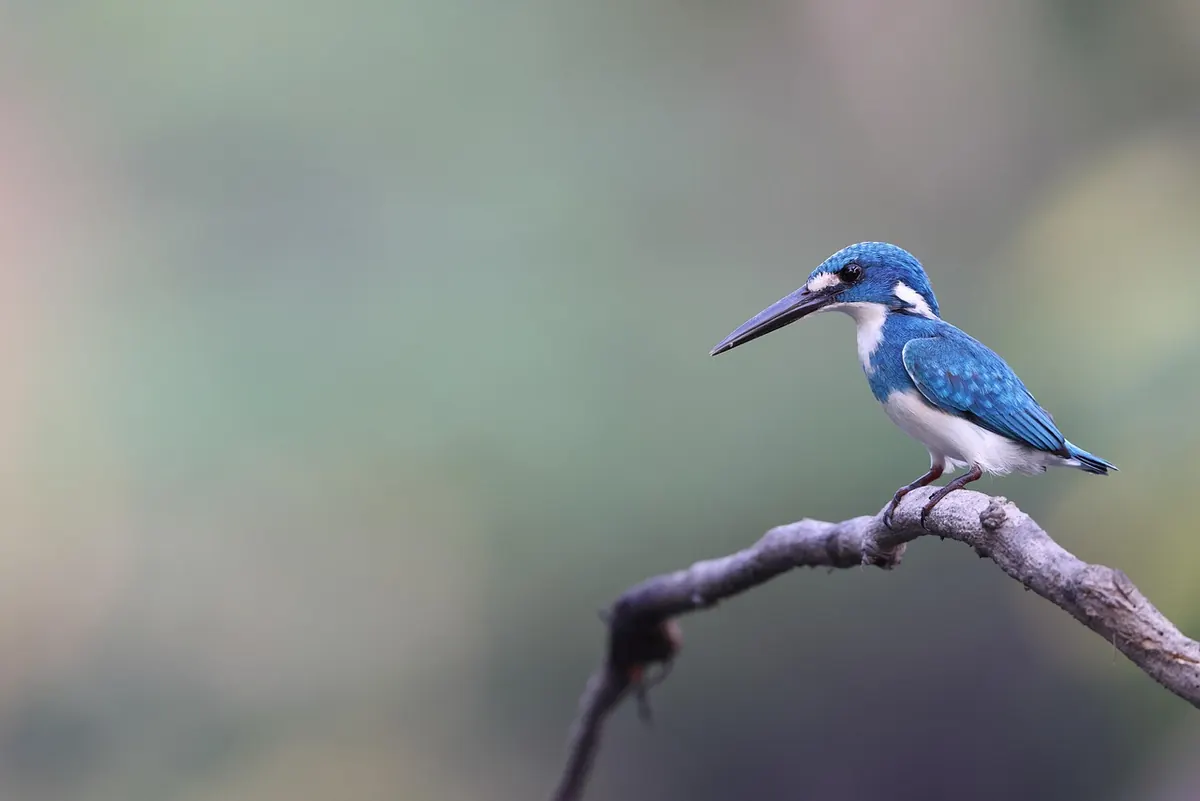
Size of a sparrow, but built oddly: a heavy head, a stubby tail and a bill like a dagger. In good light the back is brilliant blue and turquoise, the underparts orange. In poor light it reads as a dark, blunt-headed shape, which is why the flight matters so much.
Kingfishers travel in a dead straight line, often a foot or two above the water, and they hug the bends. Watch a meander on a quiet stretch and the bird may come to you rather than past you.
Listen as well. The call is a thin, high, sharp whistle — a single note, sometimes doubled — and it is often given in flight before the bird appears. That whistle is the most reliable early warning you will get.
Perch habit is a giveaway too. A kingfisher sits still and low, on a branch, a root or a stone a short way above the surface, then plunges vertically. Dippers do not do this.
The Dipper: Plump, Bobbing, and Happier Underwater
Dippers look like a large thrush that has been over-inflated. Dark brown, short-tailed, with a bright white bib that is hard to miss against a wet rock. They stand on midstream boulders in exactly the sort of fast, broken water that puts other birds off.
Then they bob. Constantly. A dipper flexes its legs and dips its whole body, again and again, even while singing. No other river bird does this so relentlessly.
The party trick is below the surface. A dipper walks into the current and continues along the riverbed, head upstream, turning stones for larvae. Watch a bird that vanishes at the edge of a riffle and reappears ten metres upstream, still walking.
Two more clues. The call is a hard, metallic zit, clipped and percussive, easy to learn. And when a dipper blinks, the eyelid flashes white — an odd, memorable detail you will notice on close views.
Birders often find dippers by walking upstream, since the birds tend to move up and down their own stretch of river. Pick a rocky, well-oxygenated section; on slow, silty reaches you are unlikely to meet one.
The Grey Wagtail: The Yellowest Bird With a Grey Name
Grey wagtails are badly named. The back is grey, yes, but the underparts are yellow, strongest under the tail, and the tail is the longest of any British wagtail. In winter the yellow fades but rarely disappears.
The tail is the tell. It bobs almost continuously, a slower, more rhythmic motion than a dipper's whole-body dip. The bird also walks and runs along the waterline, picking insects from wet stones and weir sills.
Flight is bounding and buoyant, with the long tail trailing behind. The call is a sharp, explosive tchik, often given twice in quick succession as the bird moves along a river.
Habitat helps. Grey wagtails like moving water — weirs, mill races, bridge aprons, the splash zone below a sluice. You will also find them on canals and lake edges outside the breeding season. If a yellow-bellied wagtail is standing on a gravel path fifty metres from any water, that is a different species entirely: the yellow wagtail, a farmland bird of wet meadows, which does not bob on weirs.
Two More to Sort Out: Pied Wagtail and Common Sandpiper
Pied wagtail
Black, white and grey, with a clean white face and a black bib, and legs that are black rather than the grey wagtail's pinkish-flesh. Its tail bobs and its flight bounds in exactly the same way as a grey wagtail's, so colour and setting are your only separators. Pied wagtails are the ones on car parks, bridges, gravel banks, sewage works and rooftops. In winter they gather in town-centre roosts, which surprises people who think of them as river birds.
Common sandpiper
A small wader, brown above and white below, with a distinctive wedge of white between the folded wing and the breast — the "spur". It teeters, dipping its rear end rather than its whole body, on a quicker, twitchier rhythm than a wagtail. In flight it skims low over the water with those stiff, flickering wingbeats and calls a piping tsee-tsee-tsee. Look for it on shingle edges and weir pools, mainly on passage in spring and autumn, and breeding on stony upland stretches.
Quick Comparison at a Glance
- Straight, low, whirring flight, follows the river's line: kingfisher or dipper.
- Bounding flight with deep dips: wagtail — check colour and leg colour to choose between grey and pied.
- Stiff flickering flight, teetering on shingle: common sandpiper.
- Sits still on a low perch, then plunge-dives: kingfisher.
- Bobs whole body, stands in fast white water, walks underwater: dipper.
- Bobs long tail, feeds along weir sills and wet stones: grey wagtail.
Putting It Into Practice
Pick one bend and stand still for ten minutes. River birds are creatures of habit, and a kingfisher that passes you once will often pass again on the same route within the hour. Bridges make excellent vantage points because you get height, shade and a view of both banks at once.
Go early. Fast-water birds are most active in the first hours after dawn, and low sun behind you gives the best light for picking out a blue back or a white bib.
Keep a note of what you see and where: date, stretch of river, whether the water was high or low. After a season you will have your own local map of which birds use which riffles, and that is worth more than any identification chart.
Finally, watch your own impact. Stay on the bank, keep dogs out of riffles and gravel edges during the nesting season, and give a bird that is feeding deliberately a wide berth. Half the pleasure of learning these five is that they are still there to learn from next year.
Photo: feathercollector / Pixabay