Barbless Hooks and Catch-and-Release: A Checklist for Protecting Wye Fish Stocks
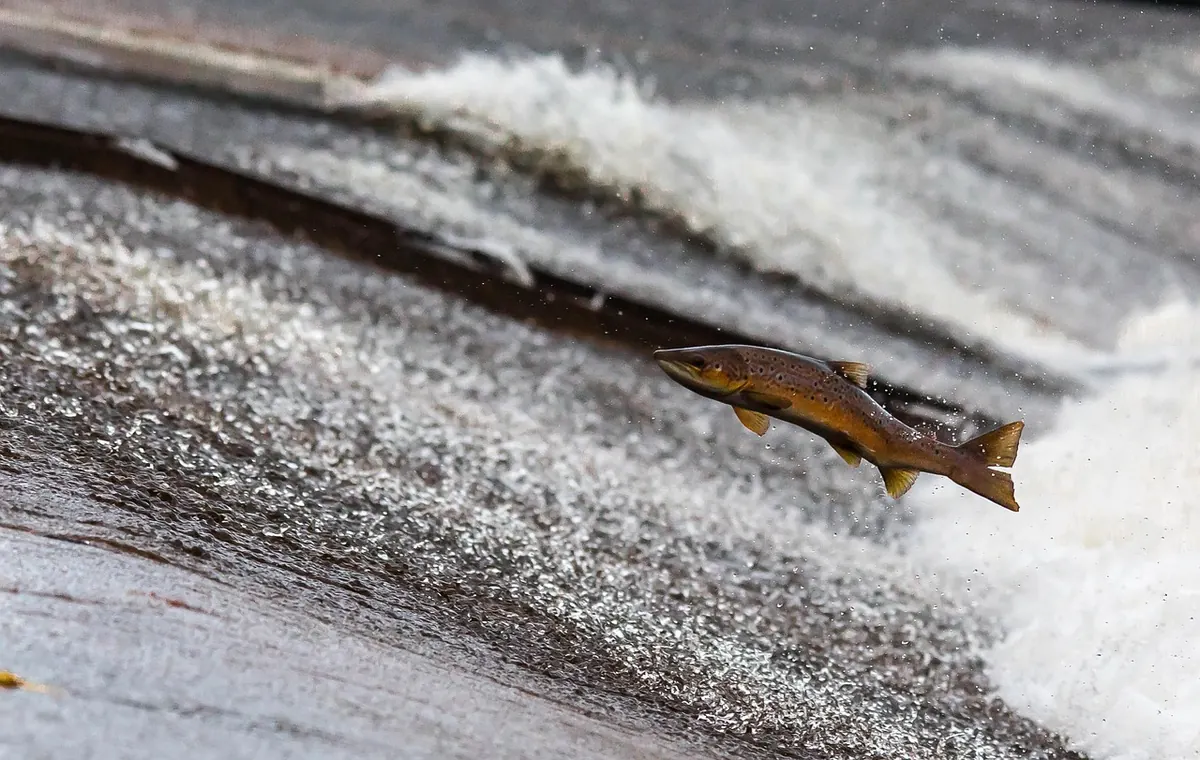
There is no stocking tank above the Wye. The barbel, chub, dace and grayling you catch are wild fish the river made itself, and one that goes back in poor condition is a small subtraction from a stock already working against low flows, silt, predation and pollution.
Which is why the least glamorous decision on the bank — a hook with no barb on it — matters more than most of what gets argued about over a flask of tea.
Why a Barbless Hook Is a Conservation Tool
A barb exists to stop bait sliding off and to hold a fish while you play it. Neither job needs much. Keep a light tension on the line and a barbless hook stays where it is; bait that keeps falling off is usually a bait problem, not a hook problem.
The damage a hook does is rarely on the way in. It happens on the way out, when a barbed point has to be forced back through tissue it has already cut, enlarging the wound and slowing the unhooking. A barbless hook — or one whose barb has been flattened with pliers — slips back along the path it made. Less torn tissue, less time out of the water, and a better chance the chub you release this evening is still feeding in the same swim next week.
Some club waters and fisheries insist on barbless hooks. Treat it as the default on the Wye even where nobody is checking.
Hook Choice: What to Look For
A few small choices separate a hook that releases cleanly from one that causes trouble.
- Crush the barb properly. Flatten it against the shank with fine pliers until you can run a fingertip over it without catching. A half-crushed barb is worse than either option.
- Match the hook to the fish, not to your nerves. Oversized hooks cause more damage coming out. The size that sits neatly in a dace's jaw is not the size for a double-figure barbel.
- Go fine wire and wide gape for most coarse fishing. Fine wire penetrates easily, holds with less pressure, and straightens or pulls free if you snag. A lost hook beats a tethered fish.
- Try circle patterns for bottom baits. They tend to hook in the jaw corner or scissors rather than deep, which turns unhooking into a ten-second job.
- Swap lure trebles for singles, or crush all three points. A single hook comes out of a pike's jaw more easily and is kinder to your knuckles.
- Check the point after every fish, every snag and every cast into gravel. If it drags on your thumbnail instead of biting, change it.
Nets, Mats and Wet Hands
A dry landing net is an abrasive. Knotless or rubberised mesh, kept wet, slides over scales and slime instead of scraping them off. Coarse knotted netting and a dry pan net do the opposite. Choose a net big enough to hold the fish without folding it in half — a barbel or a big chub should lie in the mesh, not be jammed into it.
An unhooking mat earns its place on any bank of gravel, stone or hard clay, and it should be soaked, not merely damp. A dry mat wicks moisture off a flank; a dusty one rubs grit into the eye and gill area. If you rove and fish standing up, a mat that folds onto a belt or clips to the net handle is worth the weight.
Wet your hands before you touch a fish, and never grip one with a dry towel. Cloth lifts the protective slime layer in patches, and those patches are where fungal infections begin.
Handling: Where Seconds Count
Unhook with the fish in the water wherever you can, in the net or cradled in wet hands, using forceps or long-nosed pliers rather than fingers. Barbless hooks usually turn out with a light twist and almost no pressure.
If the hook is deep and you cannot see the point, do not go digging. Cut the hooklink as close to the hook as you can and return the fish. A hook left in place with a short tag of line causes less harm than a torn gullet, and it will often work loose.
If you lift a fish for a photograph, have everything ready first: mat wet, camera unlocked, helper standing by. Count the time in seconds, not minutes. Support the body along its length with wet hands, and never hold a heavy fish vertically by the jaw or hang it from a hook.
Playing time matters too. Balanced tackle, a sensible drag and steady pressure land a fish in good time. A long, drawn-out fight on light line may feel skilful, but it leaves the fish exhausted at precisely the moment it needs energy to recover.
Water Temperature: Knowing When to Stop
Warm water holds less oxygen, and a fish that has fought hard in it takes far longer to recover. As a working rule, when the river is running around 20°C or above — often a July or August afternoon — either fish early, before the sun is on the water, or leave it alone. If you do fish through a heatwave, unhook in the water, skip the photograph, and give the fish as long as it needs to hold itself upright in the current.
Cold has its own rules. In deep winter and after a hard frost, fish recover slowly as well, and grayling are best left in peace over their spring spawning period. Salmon and sea trout fishing on the Wye is governed by its own byelaws, including restrictions that can be triggered by high water temperatures, so check the current rules with the Environment Agency or Natural Resources Wales before you travel rather than trusting what someone told you in the car park.
The Release Sequence: A Bank-Side Checklist
Once the fish is unhooked, the next thirty seconds decide how it starts the rest of its day.
- Keep the fish in the water, in the net, while you put down the forceps and the camera.
- Lower it upright, head into the current, steadying it lightly behind the wrist of the tail if you need to.
- Wait. It should tense, find its balance and push against your hand. Do not rock it backwards and forwards; that does not revive a fish.
- Let go the moment it kicks. If it turns over and drifts, hold it again and repeat.
- Never throw a fish back from height, and never tip one out of the net from the top of a steep bank.
Make It the Default
None of this needs new gear. Crushing the barbs on the hooks already in your box costs nothing and takes an evening; replacing lure trebles with singles costs a few hooks. Keeping the net wet and the mat soaked is a habit, like checking your knot before the first cast.
The Wye gets plenty of attention when something goes badly wrong — a pollution incident, a fish kill, a summer of low flows. Report those when you see them, using the incident lines published on the Environment Agency and Natural Resources Wales websites; they exist for exactly that purpose.
Most of what decides whether the river's fish stocks hold up, though, happens quietly, one fish at a time, in the way you unhook and let go. That part is entirely in your hands.
Photo: dannymoore1973 / Pixabay